The Predator's Table: Press Kit
"White supremacy" is named a myth in this work because treating it as truth gives it power it has not earned. It is a constructed lie, not a fixed reality, and that matters. Accurate naming changes the relationship to it entirely. A lie does not require resistance. It requires light.
The Book
Full title: The Predator's Table: Facing the Truth About the Myth of White Supremacy
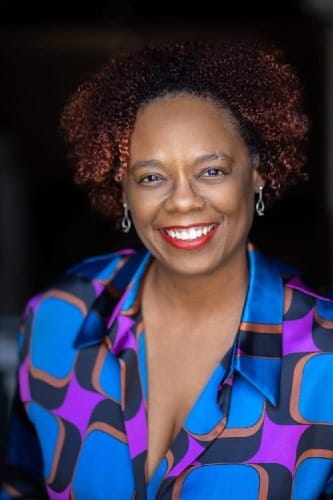
Author: Kim Crayton (she/her)
Launch date: August 1, 2026
Publisher: Kim Crayton LLC
Primary distribution: Bookshop.org (print and e-book)
About the Book
Most frameworks for addressing the myth of white supremacy begin from the assumption that the problem is complicated, the people inside it are broken, and the path forward requires dismantling something larger than any one person can touch. The Predator's Table begins somewhere else entirely. You were whole before the myth got to you. The work is not repair. It is excavation.
This field guide names the myth accurately, maps how it operates across every institution that shaped you, and makes the case that living beyond it is not a future state contingent on enough other people getting there first. It is available now. That is the argument. Everything else in the book is evidence.
About Kim Crayton
Kim Crayton is a writer, theorist, strategist, and artist whose work traces a single unbroken argument across thirty years.
Her doctoral research at Walden University named the gap between what organizations say they value and what their systems actually produce. Her public work, beginning with #causeascene in 2016, applied that argument inside the tech industry. Her economic theory, Profit Without Oppression, names what becomes possible when organizations refuse the table's logic as their operating system. The Predator's Table is the synthesis.
She is the founder of three interconnected institutions: Life Beyond the Supremacy Myth, a community and cultural framework ecosystem for antiracist practice; Kim Crayton LLC, an organizational advising practice built around the Profit Without Oppression framework; and Thoth Institute, the classroom where the frameworks are taught and the research is developed.
She is a U.S.-based Black woman and a scholar-practitioner. She does not theorize from a distance. She is currently in the terrain she writes about.
Author Photos
All five photos are available for download. The primary headshot (Kim-Crayton-Headshot-Primary) is the image used across all social platforms.


What the Book Argues: 13 Topics
These are not chapter summaries. Each entry names a distinct argument the book makes, usable as a standalone pitch, talk, podcast interview, or speaker's bureau angle. Although the field guide addresses the myth of white supremacy as the dominant global expression of supremacy thinking, the ecosystem's argument is broader: abandoning supremacy framing in all its forms.
1. The myth is a lie, not a wall.
Most frameworks for addressing white supremacy treat it as a fixed reality to fight against. Naming it a myth changes the entire orientation. A lie does not require resistance. It requires accurate naming. Once named accurately, the relationship to it changes. This is the book's foundational reframe and the argument that makes everything else possible.
2. You were whole before the myth got to you.
Every major western tradition, including therapy, self-help, and most religion, begins from the premise that humans are broken and need to be fixed. This book begins from the opposite premise. You were whole. The myth installed itself on top of that wholeness. The work is not repair. It is excavation. This argument names why every deficit-first approach to personal development has a ceiling.
3. The lid: how the myth produces the people it needs.
The myth does not fail to develop people. It actively produces someone who cannot advocate for their own development without experiencing it as a moral failure. This mechanism operates the same way across boarding schools, evangelical religion, corporate organizations, and the AP track. The container changes. The production process does not. Compliance is rewarded, questions are punished, and the self that asks questions gets replaced by the self that produces acceptable outputs.
4. Anger is the only feeling the table permits.
The myth does not produce unfeeling people. It produces people whose entire emotional range has been collapsed into the one output the table finds useful: anger. Every other feeling gets converted into fuel for that anger or named as weakness. This is why the world's leadership looks the way it does, and why Black anger specifically is the one expression that gets systematically weaponized against the person who feels it.
5. The cost to white folx is real and specific.
White folx did not get a good deal from the myth. They got isolation, emotional atrophy, the inability to build genuine community, and a nervous system organized around the constant threat of losing something that was never securely theirs. This argument does not soften the critique of whiteness. It sharpens the case for why dismantling the myth is liberation work for everyone.
6. The deferral economy: how the myth keeps you waiting.
The myth runs on deferral. Original sin to atone for. Heaven to earn. Success to achieve before rest is permitted. Joy to be scheduled after the work is done. A person organized around a deferred life is easier to extract from. Enough versus more is the central question this economy is designed to prevent you from asking.
7. Producing is not the same as contributing.
Every institution the myth built measures output, not contribution. The grade point system, the quarterly earnings report, the performance review, all of them answer how much was produced. None of them ask what the production was for, who it served, or whether it was worth the cost. That question is a threat to the table's operating logic. This argument names why so many people work hard their entire lives and still feel like nothing they do matters.
8. Trust versus loyalty: what the myth trained you to confuse.
The myth trained white folx to perform loyalty, not build trust. Loyalty is unconditional allegiance that cannot be questioned without being destroyed. Trust is earned through demonstrated behavior over time and has accountability built into its structure. This distinction explains everything from the collapse of progressive coalitions to why organizations that claim to value community cannot build it.
9. Fear is infrastructure, not a feeling.
The myth did not install self-distrust by threatening you once. It installed it by teaching you that the fear was yours. Fear as infrastructure means it was built deliberately, maintained systematically, and designed to keep you organized around someone else's interests before you could ask whose. This is the argument that explains why knowing the myth exists is not enough to exit it.
10. The shed: what happens when the lid comes off.
When people begin to name the myth accurately, something happens in the body before it happens in the mind. Most frameworks call this a crisis. This book names it as a shed: the predictable human response to beginning to resist an external system that has been operating on you your entire life. The shed is not a breakdown. It is evidence the work is happening.
11. The two requirements: a strong why and a consistent practice of asking "What Am I Missing?"
Understanding the myth is not enough to sustain this work. Two things are required underneath the understanding. A why so deeply rooted in personal truth that it does not need the room's agreement to remain intact. And a consistent practice of asking what am I missing, not as a performance of humility but as a survival tool and an analytical one. Without both, people understand the diagnosis and cannot stay with the treatment.
12. Already here.
The book does not end with a destination. It ends with evidence that what the work is building toward is already present in the people doing it. Living beyond the myth is not a future state contingent on enough other people getting there first. It is available now.
13. The landing: living as yourself is not a luxury.
The book addresses the myth of white supremacy as the dominant global expression of supremacy thinking, but the ecosystem's argument is broader. Any framework that organizes people into hierarchies of worth, that rewards compliance and punishes the self that asks questions, produces the same harm. The work is about what becomes possible when supremacy framing, in any form, no longer has an address in your life. Living as yourself, fully, without performing your needs or shrinking to fit the room, is what the work is actually for. That is the argument underneath every other argument in the book. It is also the answer to the question every interviewer will eventually ask: what do you actually want?
"Someday no one will have to choose between who they are and living their enough."
Sample Interview Questions
Topic 1: The myth is a lie, not a wall
Why does naming white supremacy a myth matter? What does that shift actually change for the person hearing it for the first time?
Most conversations about white supremacy begin from the assumption that it is a permanent feature of the landscape. What made you decide to start somewhere different?
What happens to a person's relationship to this work when they stop treating the myth as a wall they have to break through and start treating it as a lie they can name accurately?
Topic 2: You were whole before the myth got to you
Every framework I have encountered begins from the idea that people need to be fixed. You begin from the opposite. Where did that starting point come from for you?
What does it mean practically to do excavation instead of repair? What does that look like in someone's daily life?
Why do you think deficit-first approaches to personal development have a ceiling? What gets left out when we start from brokenness?
Topic 3: The lid: how the myth produces the people it needs
You use the word "produces" rather than "damages" or "harms." That is a specific choice. What does it mean to say the myth produces people rather than hurts them?
You name boarding schools, evangelical religion, corporate organizations, and the AP track as containers running the same production process. What is the mechanism they share?
What does it cost a person to advocate for their own development inside a system that was designed to make that feel like a moral failure?
Topic 4: Anger is the only feeling the table permits
You argue that the myth collapses the full emotional range into anger. How does that happen? What gets converted, and into what?
What is the specific function of Black anger in the myth's operating logic, and how does it differ from the function of white anger?
If anger is the only output the table permits, what happens to a person who refuses to produce it? What does that refusal cost?
Topic 5: The cost to white folx is real and specific
This book does not soften the critique of whiteness, but you make the case that dismantling the myth is liberation work for white folx too. How do you hold both of those things at once?
You name isolation, emotional atrophy, and a nervous system organized around threat as specific costs. How did you arrive at those? What does the evidence look like?
What does genuine community look like for white folx who have only ever built community on the myth's terms? Is that even possible to imagine from inside it?
Topic 6: The deferral economy: how the myth keeps you waiting
The deferral economy is one of the most precise framings I have encountered for how the myth operates daily. Where did that framing come from for you?
You name original sin, heaven, success, and scheduled joy as examples of deferral. What do they have in common structurally?
Enough versus more is the question the deferral economy is designed to prevent. What happens when someone actually asks it?
Topic 7: Producing is not the same as contributing
The grade point system, quarterly earnings, performance reviews: you name all of them as measuring output rather than contribution. What would it look like to measure contribution instead?
Why is the question "what was the production for" a threat to the table's operating logic? What does the table lose if that question gets answered?
So many people work hard their entire lives and still feel like nothing they do matters. You are saying that is not a personal failure. What is it?
Topic 8: Trust versus loyalty: what the myth trained you to confuse
Loyalty and trust are used interchangeably in most spaces. You draw a very specific line between them. What is the operational difference?
You connect this distinction to the collapse of progressive coalitions. Can you walk through how that works?
What does an organization that has built loyalty instead of trust look like from the inside? What are the signals?
Topic 9: Fear is infrastructure, not a feeling
Fear as infrastructure is a reframe that lands hard. What does it mean to say fear was built deliberately and maintained systematically?
You argue that knowing the myth exists is not enough to exit it. Why not? What does fear as infrastructure explain that awareness alone cannot?
If the fear was installed, what does it take to begin dismantling it?
Topic 10: The shed: what happens when the lid comes off
You name what most frameworks call a crisis as a shed instead. What does that renaming do for the person going through it?
You say the shed is predictable. What makes it predictable? What does it follow from?
What do people need during a shed that they are unlikely to get from the frameworks currently available to them?
Topic 11: The two requirements: a strong why and a consistent practice of asking "What Am I Missing?"
You name two specific requirements for sustaining this work. Why these two? What do they make possible that understanding the diagnosis alone does not?
A why that does not need the room's agreement to remain intact, that is a high bar. How does someone find that? What does it feel like when they have it?
Asking "what am I missing" as a survival tool, not a performance of humility: what is the difference between those two things in practice?
Topic 12: Already here
The book ends with evidence, not a destination. What does that evidence look like? What are you pointing to?
Living beyond the myth is available now, not contingent on enough other people getting there first. That runs against almost everything in the public conversation about this work. Where does that conviction come from?
What does it look like when someone is already living it? What are the markers?
Topic 13: The landing: living as yourself is not a luxury
This book is about the myth of white supremacy, but you are making a broader argument about supremacy framing in all its forms. How do you hold that scope without losing the specificity of what the myth of white supremacy does?
Living as yourself, fully, without performing your needs or shrinking to fit the room: that is what you say the work is actually for. What gets in the way of that for most people?
Every interviewer eventually asks: what do you actually want? You named this as the answer to that question. What is the answer?
Contact
Show and speaking inquiries:
Erin (she/her)
Strat House
201-247-7605 for Text Inquiries
Press and media inquiries:
Shev Rush (he/him)
SRPR
213-503-4828
"Someday no one will have to choose between who they are and living their enough."